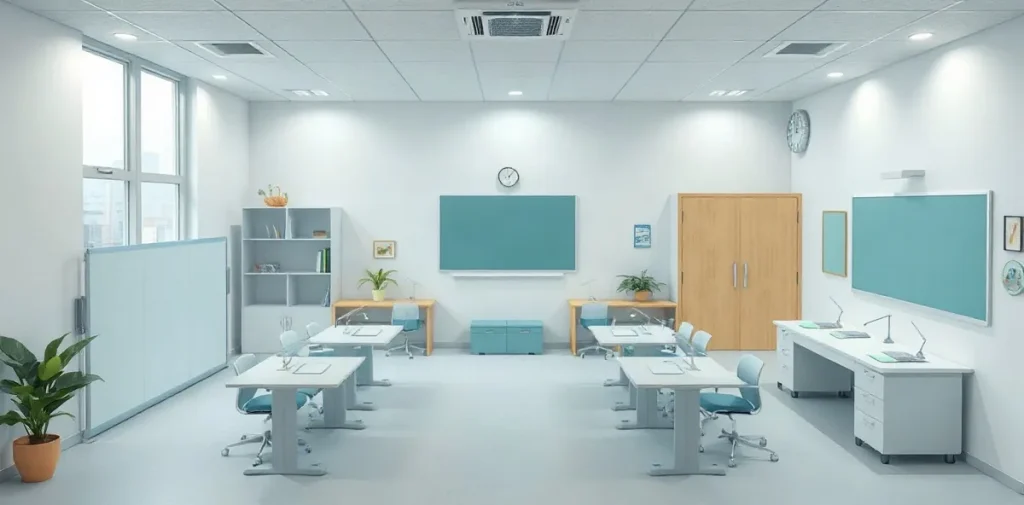
Innovations are radically transforming curricula by introducing new technologies, teaching methods, and an interdisciplinary approach that makes education more adaptable to modern challenges and labor market demands. These changes enable students to develop skills essential for success in life and work in the future.
The growth of digital platforms, artificial intelligence, and interactive tools is driving the emergence of flexible study plans tailored to individual needs and interests. The focus is shifting from memorizing facts to fostering critical thinking, creativity, and information literacy. This article explores how innovations specifically impact the content and structure of educational programs, as well as the new opportunities they open for teachers and students.
For a broader understanding of the changes in science and education in 2026, we recommend our review «2026 in Science: Key Trends and Achievements,» which details fundamental shifts across scientific fields and their influence on educational practices.
| Technology/Method | Equipment/License Cost | Implementation Date | Main Advantages |
|---|---|---|---|
| GPT-5 and GPT-6 | included in educational programs | since 2025 | automation of learning and assignment grading |
| Labster Virtual Laboratories | about 200,000 ₽ per year | since 2023 | practical experiments online |
| Oculus Quest 3 AR/VR | 350 $ per set | since 2024 | immersion in practical lessons |
| IBM Quantum System One | about 3 million $ | since 2024 | quantum computing course |
| «Yandex.Education LMS» | integrated in schools | by 2026 in 30% of schools | adaptive learning |
- 65% of students reported improved critical thinking skills thanks to AI courses
- 8% increase in average grades in specialized university courses with AR/VR
- 200,000 ₽ annual Labster virtual lab license fee per university
- 350 $ cost of Oculus Quest 3 AR/VR equipment set
- 40% of universities have trained faculty for new disciplines
Which Scientific Advances Impact Course Content in 2026?
AI in Curricula
The integration of AI models GPT-5 and GPT-6 into educational programs since 2025 has significantly altered computer science and linguistics courses at Moscow State University. These models are used to demonstrate cutting-edge natural language processing and text generation methods, allowing students to work with advanced AI technologies on real-world tasks.
Course materials now include practical exercises with GPT-6, which has enhanced content comprehension and generation capabilities. The introduction of such models also promotes the development of skills for critically analyzing AI outputs and understanding the ethics of intelligent systems, which has become a mandatory part of the curriculum.
Quantum Technologies and Biotechnology
Since 2024, Saint Petersburg State University has offered a quantum computing course using the IBM Quantum System One, valued at around 3 million dollars. This equipment enables students to learn quantum programming principles and modeling on an actual quantum processor, previously only theoretical.
In biology, since 2023, the Higher School of Economics actively incorporates CRISPR research data. Courses include analysis of genome editing and biomedical innovations, helping students grasp modern gene engineering methods and their impact on medicine and biotech.
What Educational Methods Have Emerged Thanks to New Scientific Tools?
Virtual and Augmented Environments
The project-based learning method with Labster virtual labs has become a key innovation in Russian universities. The Labster license costs about 200,000 ₽ per year per university, allowing students to conduct complex experiments in a safe digital environment, greatly expanding practical learning opportunities. Additionally, technical universities actively use AR/VR technologies, such as Oculus Quest 3 kits priced at 350 $ each, which simulate real industrial and engineering processes, enhancing material retention through immersion.
Adaptive Learning Systems
By 2026, about 30% of Russian schools have adopted adaptive learning platforms powered by machine learning, such as the «Yandex.Education LMS.» These systems automatically tailor educational content to each student’s knowledge level and learning pace, improving efficiency and reducing teacher workload. Such technologies enable personalized learning paths and real-time progress monitoring, fundamentally transforming traditional curricula.
How Have Standards and Regulations for Educational Programs Changed in 2026?
Updated FGOS 4.0 Standards
In 2026, the Federal State Educational Standard (FGOS) 4.0, approved in 2025, became mandatory for all educational programs. It introduces AI and cybersecurity as core disciplines and sets a digital literacy threshold: graduates must demonstrate proficiency with IT tools at 75% or higher on exams.
This means curricula now include modules on machine learning algorithms, AI ethics, and data protection, reflecting current labor market and digital security demands. This approach aims to boost graduates’ competitiveness and prepare them for work in high-tech environments.
Government Support for Innovations
Since 2024, the government annually allocates grants ranging from 5 to 20 million rubles to support innovative educational projects focused on integrating advanced technologies into teaching. These funds encourage the development of new teaching methods, including the use of virtual and augmented reality, as well as AI integration into learning platforms.
- Grants from 5 to 20 million ₽ stimulate innovation projects;
- FGOS 4.0 mandates AI and cybersecurity studies;
- Digital literacy threshold set at no less than 75% IT proficiency.
When Does Integrating New Technologies in Education Face Challenges?
Staff Shortages
The integration of new technologies in education is hindered by a shortage of qualified instructors for modern disciplines: less than 40% of universities in 2026 have specialists capable of teaching new programs. This staffing gap limits the broader adoption of innovations and lowers educational quality.
The shortage is especially acute in AI and robotics fields, which require deep expertise and ongoing professional development. Targeted retraining programs and preparing new educators aligned with current standards are crucial to address this issue.
Financial Barriers
The high cost of equipment poses a serious obstacle to widespread implementation of tech solutions in education. For example, the LEGO Mindstorms Education EV3 robotics kit costs around 20,000 ₽, which significantly limits its acquisition in many educational institutions, especially in regional areas.
Moreover, infrastructure gaps in rural and remote regions, where internet coverage is below 60%, hinder the use of online resources and digital platforms. This requires additional investments in network development and technical support to ensure equal access to new educational technologies.
How Do Educational Institutions Assess the Effectiveness of Scientific Innovations?
Improvement of Academic Results
Educational institutions evaluate the effectiveness of scientific innovations through improvements in key academic indicators, such as average grade growth and the development of critical thinking. According to monitoring by Russia’s Ministry of Education and Science, in 2026, 65% of students reported enhanced critical thinking skills thanks to AI-based courses. Additionally, since 2024, universities actively utilizing AR/VR technologies have seen an 8% increase in average grades in specialized subjects.
Optimization of the Learning Process
Indicators for assessing optimization include reduced preparation time for materials and the adoption of automated systems. The use of AI and automation has cut material preparation time by 30%. Popular tools include platforms from companies specializing in educational technology, such as AI-based automated systems developed by the Russian startup «ObrazTech.» Implementing such solutions helps save instructors’ time and improves program quality by enabling rapid content updates.
Frequently Asked Questions
Which specific AI innovations are integrated into curricula?
How much does it cost to equip an educational institution with a virtual laboratory?
Why aren’t new learning technologies implemented in all schools?
What educational standard changes were introduced in 2025?
How can the effectiveness of new teaching methods be measured?
Key Takeaways
- Mandatory study of AI and cybersecurity in FGOS 4.0 since 2025
- Use of Labster virtual labs with licenses costing about 200,000 ₽ per year
- Deployment of Oculus Quest 3 AR/VR equipment priced at 350 $ per set
- Shortage of qualified teachers for new disciplines in 60% of universities
- 8% average grade improvement with adoption of innovative technologies